
How Prizmah works
Platelets are an accessible reservoir of growth factors. On activation they degranulate, releasing bioactive proteins that attract macrophages and mesenchymal stem cells to govern and regulate tissue healing.
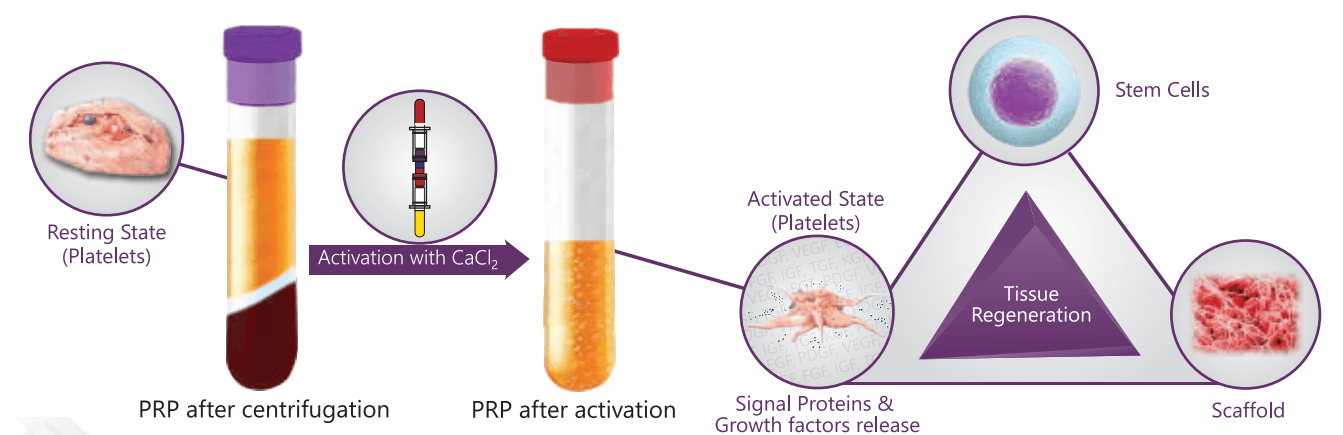
Resting platelets are activated with calcium chloride, releasing signal proteins and growth factors that drive tissue regeneration and provide a scaffold for repair.
From draw to application in four steps
A single 6-minute spin and a closed-system transfer deliver pure, ready-to-use PRP.
 1
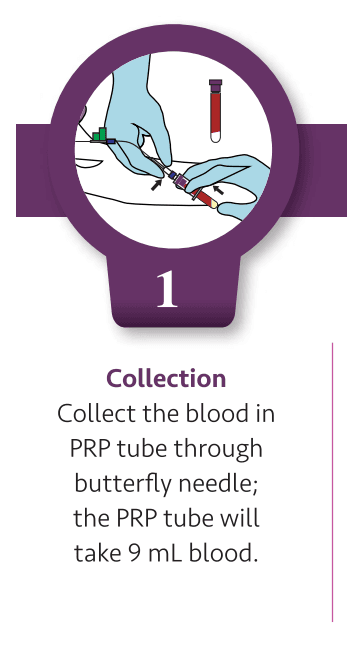
1Collection
Collect blood into the PRP tube through a butterfly needle; the tube takes 9ml of blood.
 2
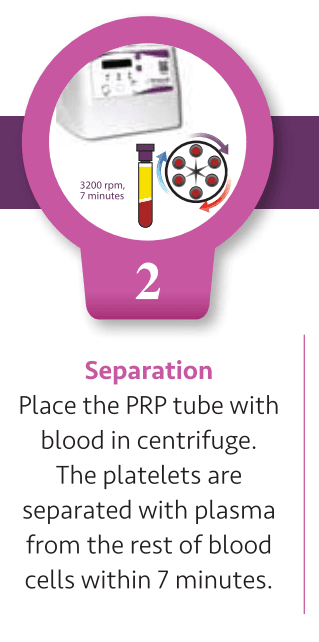
2Separation
Centrifuge the PRP tube. Platelets separate from the rest of the blood cells within 6 minutes at 2800 rpm.
 3
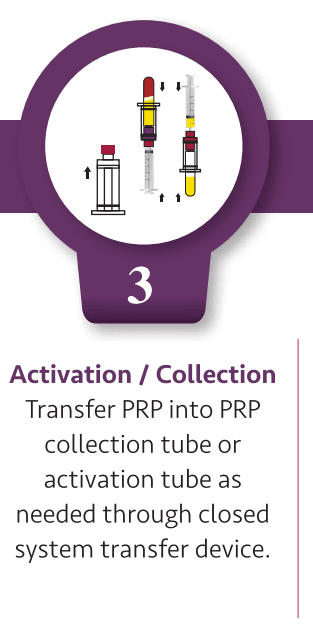
3Activation / Collection
Transfer PRP into the activation or collection tube through the closed-system transfer device.
 4
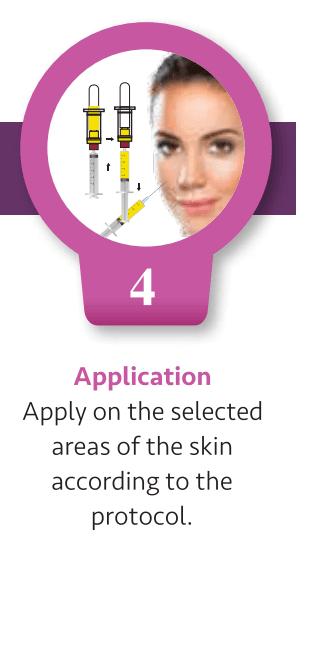
4Application
Apply to the selected areas — skin, joints, muscles or wounds — according to the clinical protocol.
A complete regeneration cycle
Prizmah stimulates the superficial and deep dermis to promote collagen, elastin and hyaluronic-acid production.
Renew
Stimulate tissue regeneration and promote collagen production.
Refine
Improve skin glow with stem-cell proliferation and differentiation.
Refresh
Soften facial lines and smooth skin texture and tone.
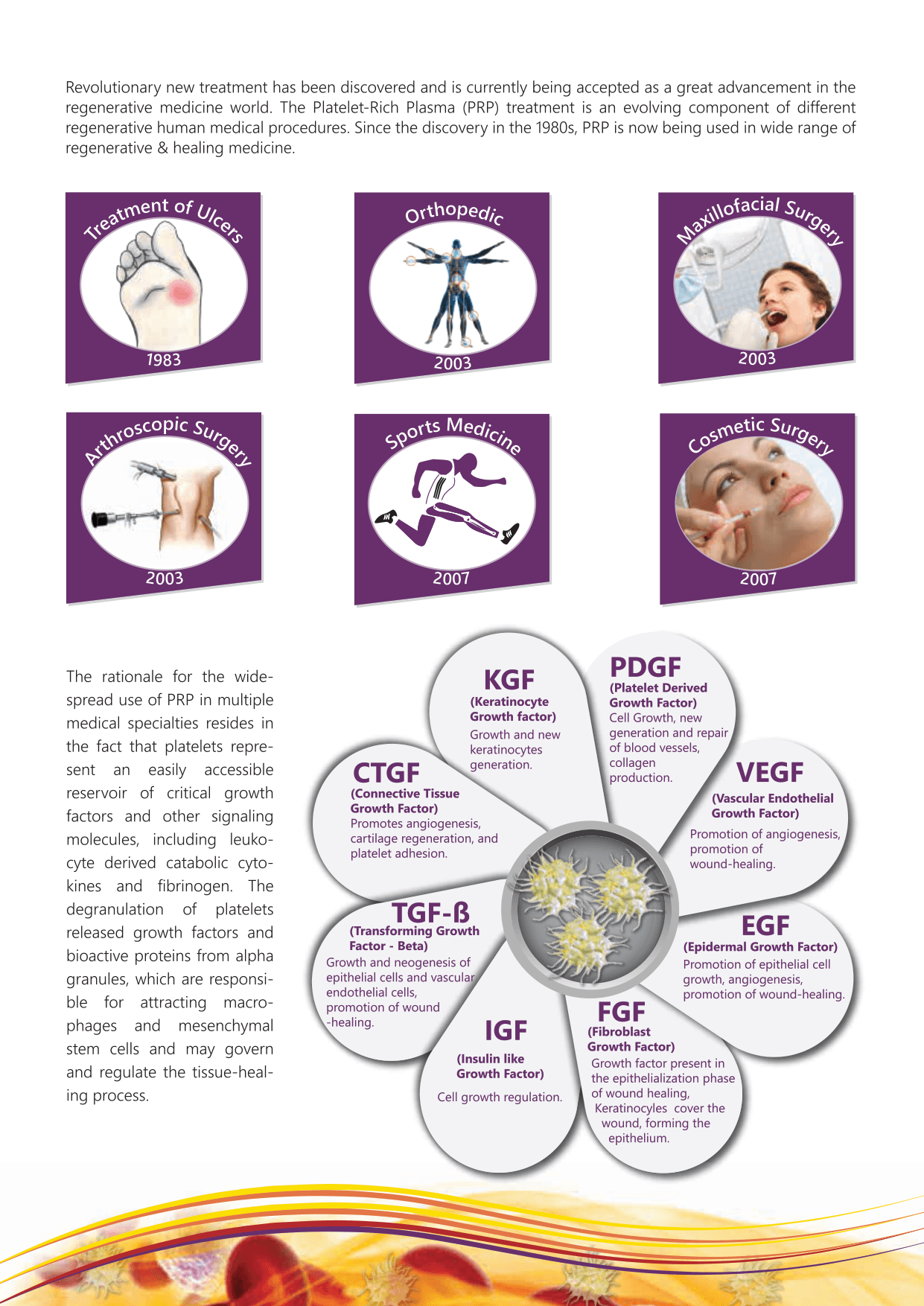
Eight growth factors, released on demand
Activated platelets degranulate to release a concentrated payload of signalling proteins that orchestrate tissue repair and regeneration.
Cell growth, new generation and repair of blood vessels, collagen production.
Growth and neogenesis of epithelial and vascular endothelial cells; promotes wound healing.
Promotion of angiogenesis and wound healing.
Promotion of epithelial cell growth, angiogenesis and wound healing.
Active in the epithelialization phase; keratinocytes cover the wound to form the epithelium.
Cell growth regulation and myoblast proliferation.
Growth and new keratinocyte generation.
Promotes angiogenesis, cartilage regeneration and platelet adhesion.
Growth factors & proteins in Prizmah PRP
Beyond the headline growth factors, activated PRP delivers a broad panel of chemokines, adhesive proteins and proteases.
Chemokines / Cytokines
- Interleukin
- Platelet Basic Protein
- Platelet Factor
- Chemokines Ligand 5
- Stromal Cell-derived Factor
- Chemokines Ligand 2
Adhesive Proteins
- Vitamin D-binding protein
- Plasminogen
- Plasminogen Activator Inhibitor
- Thrombospondin
- Fibrinogen
- Fibronectin
- Vitronectin
- α1-microglobulin
Growth Factors
- Connective Tissue Growth Factor
- Hepatocyte Growth Factor
- Insulin-Like Growth Factor
- Platelet Derived Growth Factor
- Vascular Endothelial Growth Factor
- Transforming Growth Factor-β
- Fibroblast Growth Factor-2
Proteases / Antiproteases
- α-2-macroglobulin
- ADAMTSs
- Matrix Metalloproteinase
Ready to bring Prizmah to your practice?
Request a personalised demonstration, or download the clinical brochures to learn more.