PRP for Androgenic Alopecia: A Suggested Treatment Protocol
Androgenic alopecia affects around 45% of men and 35% of women by age 60. Here's how activated, growth-factor-rich plasma is used to treat it — and a session schedule drawn from clinical study with the Prizmah system.
Androgenic alopecia (AGA) is the most common form of hair loss, driven by genetic and hormonal factors that gradually convert thick, pigmented hairs into barely noticeable ones. It is estimated that around 45% of men and 35% of women develop AGA by about the age of 60. With relatively few durable therapies available, Platelet-Rich Plasma has become an attractive, autologous alternative.
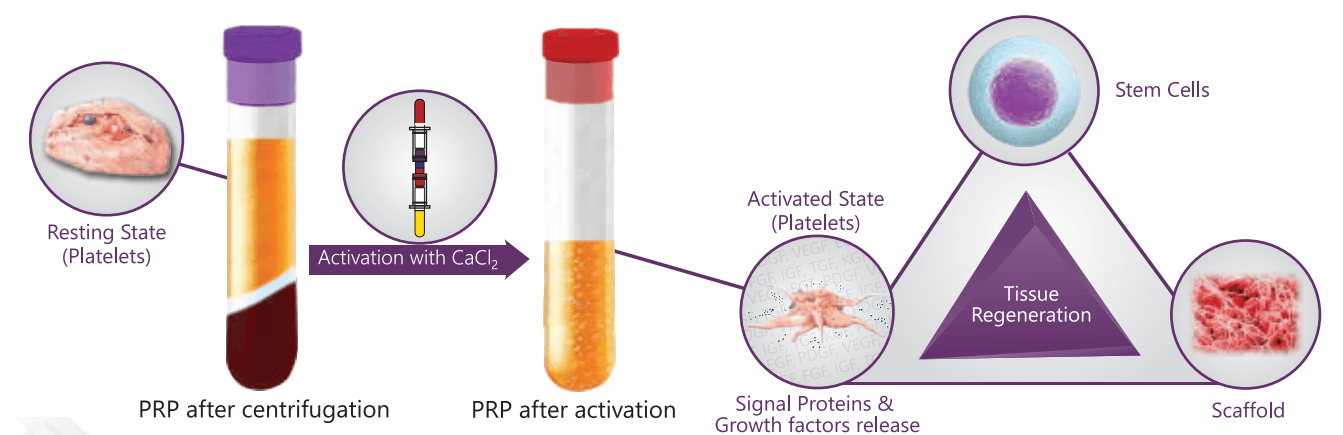
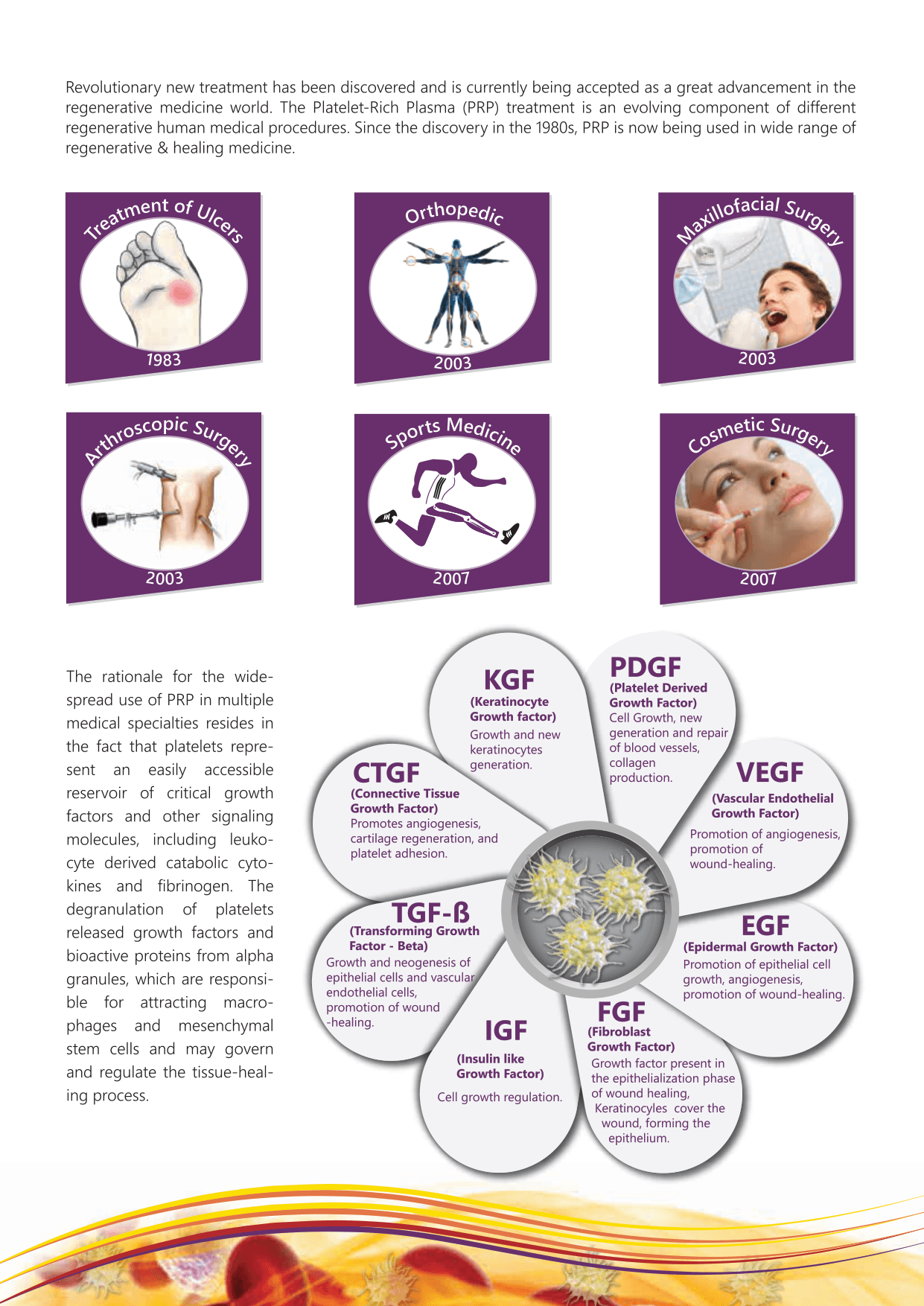
The rationale is biological. After activation, platelets release a concentrated payload of growth factors — PDGF, VEGF, IGF-1, TGF-β, FGF and EGF among them — that stimulate the dermal papilla, promote angiogenesis around the follicle, delay apoptosis and help extend the anagen (active growth) phase of the hair cycle. In short, the same signalling proteins that drive tissue repair elsewhere in the body can help move dormant follicles back toward growth.
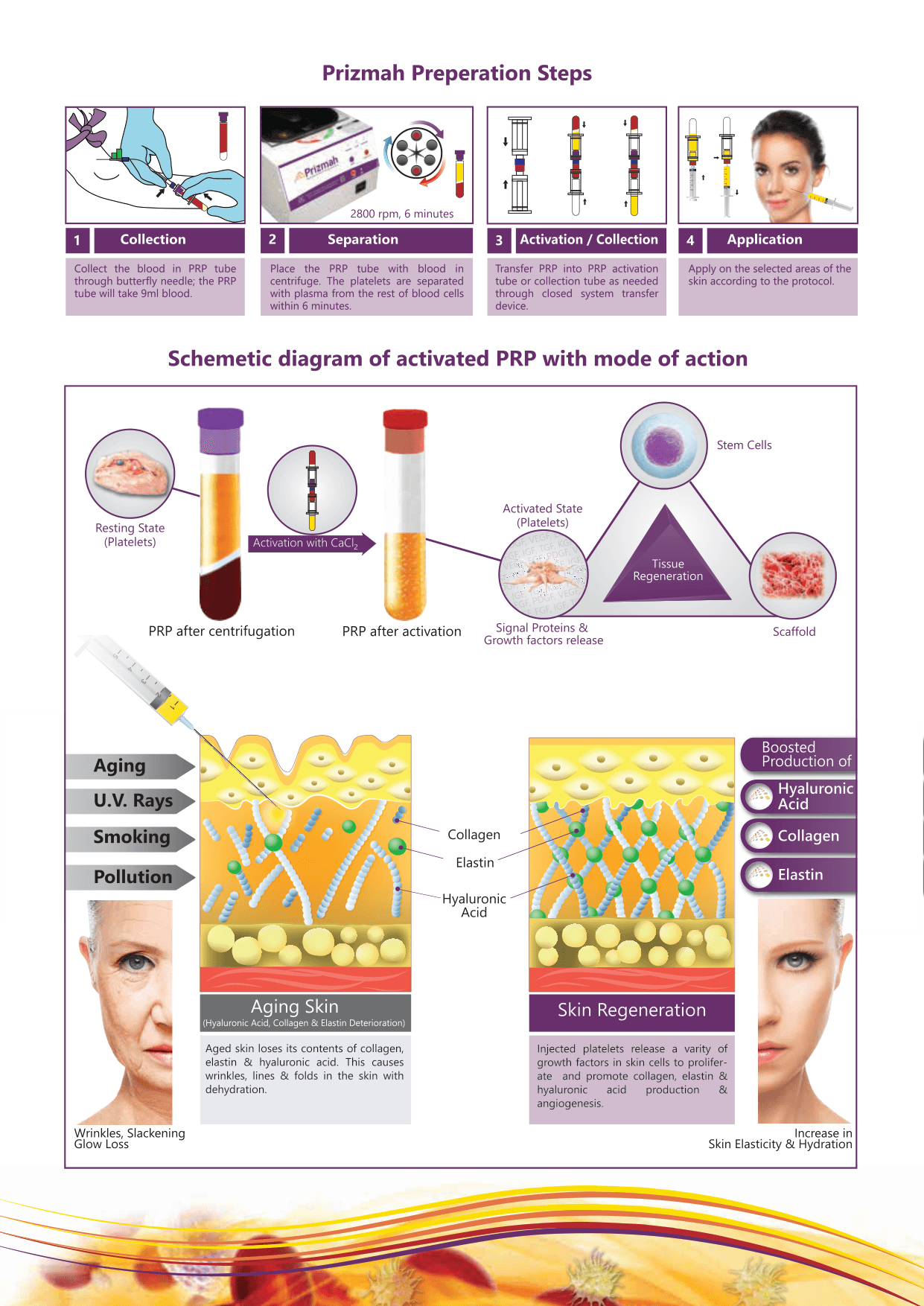
A 2021 literature review and treatment protocol published in the European Journal of Medical and Health Sciences (Bano & Dar) documented this approach using the Prizmah system. Their preparation: 18 mL of the patient's blood is drawn into two 9 mL tubes containing sodium citrate and a gel separator, then centrifuged in a single spin. This yields roughly 10 mL of pure autologous PRP — free of red cells and retaining only about 10% of white cells. The PRP is activated with 0.03 mL of calcium chloride through a closed-system transfer device, giving a growth-factors-rich plasma at a physiologic pH of about 7.4.
Application in the study was straightforward: the thinning area along the hairline was cleansed with 70% alcohol (no local anaesthesia), and the activated plasma was injected at approximately 0.1 mL/cm² across the treatment zone.
The suggested protocol is a session at the first, second, third, sixth and twelfth month, followed by one maintenance session per year. Across the reviewed literature, seven of nine studies confirmed PRP's efficacy in AGA, with reported improvements in hair density, hair count and quality of life — and side effects described as minimal, owing to the autologous, xeno-free nature of the material.
As with any regenerative therapy, outcomes vary with the severity of hair loss, the treatment protocol and the individual patient, and long-term follow-up remains an area for further study. This overview is educational and is not a substitute for professional medical assessment.
This article is derived from the official Prizmah clinical brochures and FAQ. It is for informational purposes and is not a substitute for professional medical advice.